🗺️ Combining Cu Chi Tunnels and Mekong Delta in One Day: Is It Possible?
The Honest Guide for Travelers Short on Time in Ho Chi Minh City ⏰ You’ve just landed in Ho Chi Minh City.…
Read moreCu Chi District · Ho Chi Minh City · Vietnam
Beneath the rubber plantations of Cu Chi lies one of the most extraordinary engineering feats of the twentieth century: around 200 kilometers of tunnels where an entire community lived, fought and survived — kitchens, hospitals, command posts and all. Seventy kilometers from Saigon, it is the essential half-day out of the city.
01 · The Tunnels
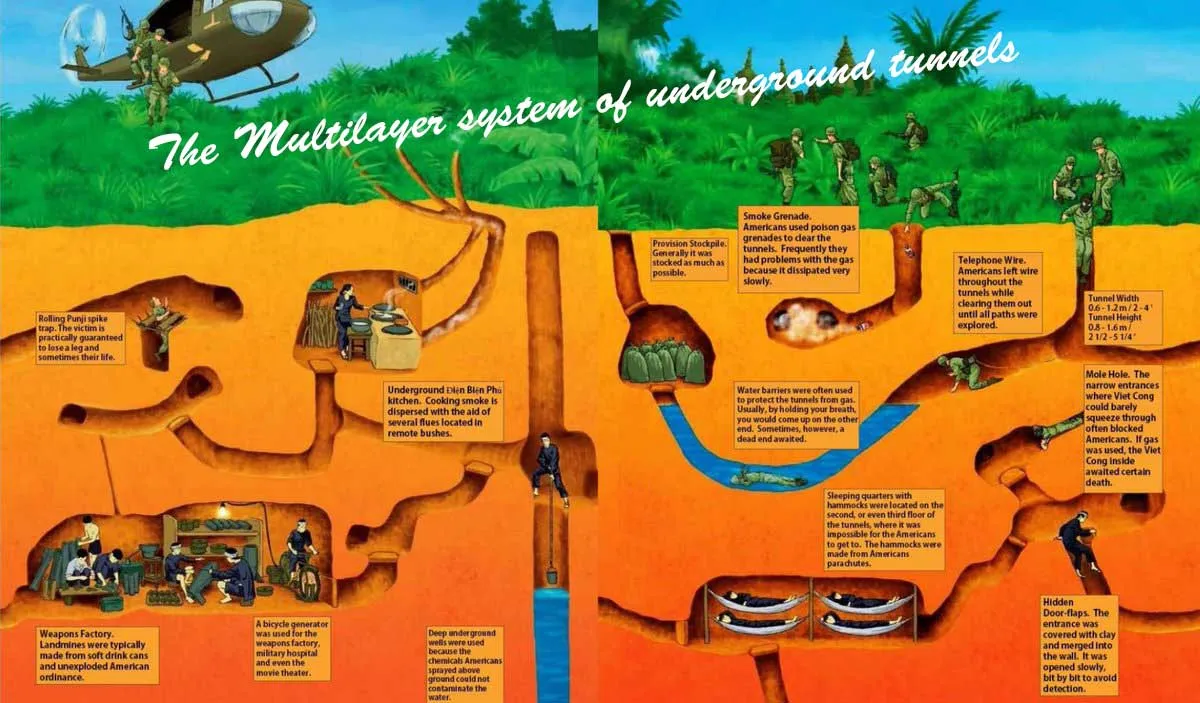
The Cu Chi tunnel network began humbly in the 1940s, as hiding places against French colonial patrols, and grew over decades into an underground city: three levels reaching down some ten meters, with sleeping quarters, field hospitals, command bunkers, kitchens that vented smoke through distant bamboo shafts, and trap-laden approaches that made the ground itself a weapon. By the war years, villages above and soldiers below shared the same soil.
Today two sections are open to visitors — Ben Dinh, closer to the city, and Ben Duoc, farther out and often quieter. Both walk you through a short, lit and widened stretch of tunnel so nobody is forced underground, and both tell the same remarkable story of ingenuity and endurance. Go with a guide if you can: the history here is the whole point, and the details are what you will retell for years.
02 · The depth gauge
The real network ran in three levels, down to around ten meters. Drag the gauge to descend — from the briefing above ground to the deepest wartime levels, and back out into the daylight.
Above ground
Every visit starts in the daylight: a short documentary, a sand-table model of the network, and a guide who explains what you are about to walk through. Do not skip this part — the tunnels make ten times more sense once the story is in your head.
Start here · the film runs continuously
Drag the gauge, tap a depth, or use the ← → arrow keys.
03 · What awaits
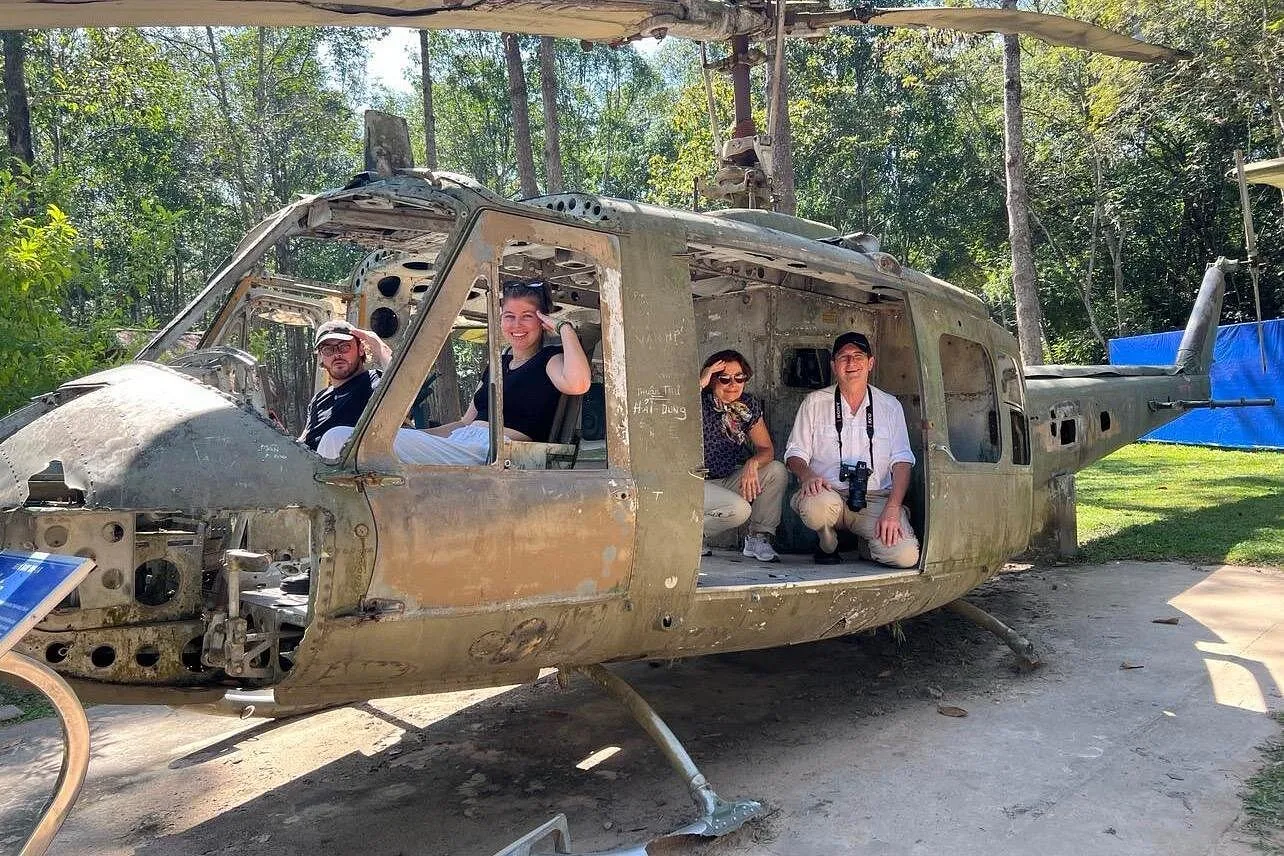
The first decision every visitor makes. Ben Dinh is closer to Saigon, easier to reach, and the busier of the two. Ben Duoc sits deeper in the countryside — larger, leafier, usually calmer, and home to a moving memorial temple. Time-pressed travelers choose Ben Dinh; those with a spare hour often swear by Ben Duoc.
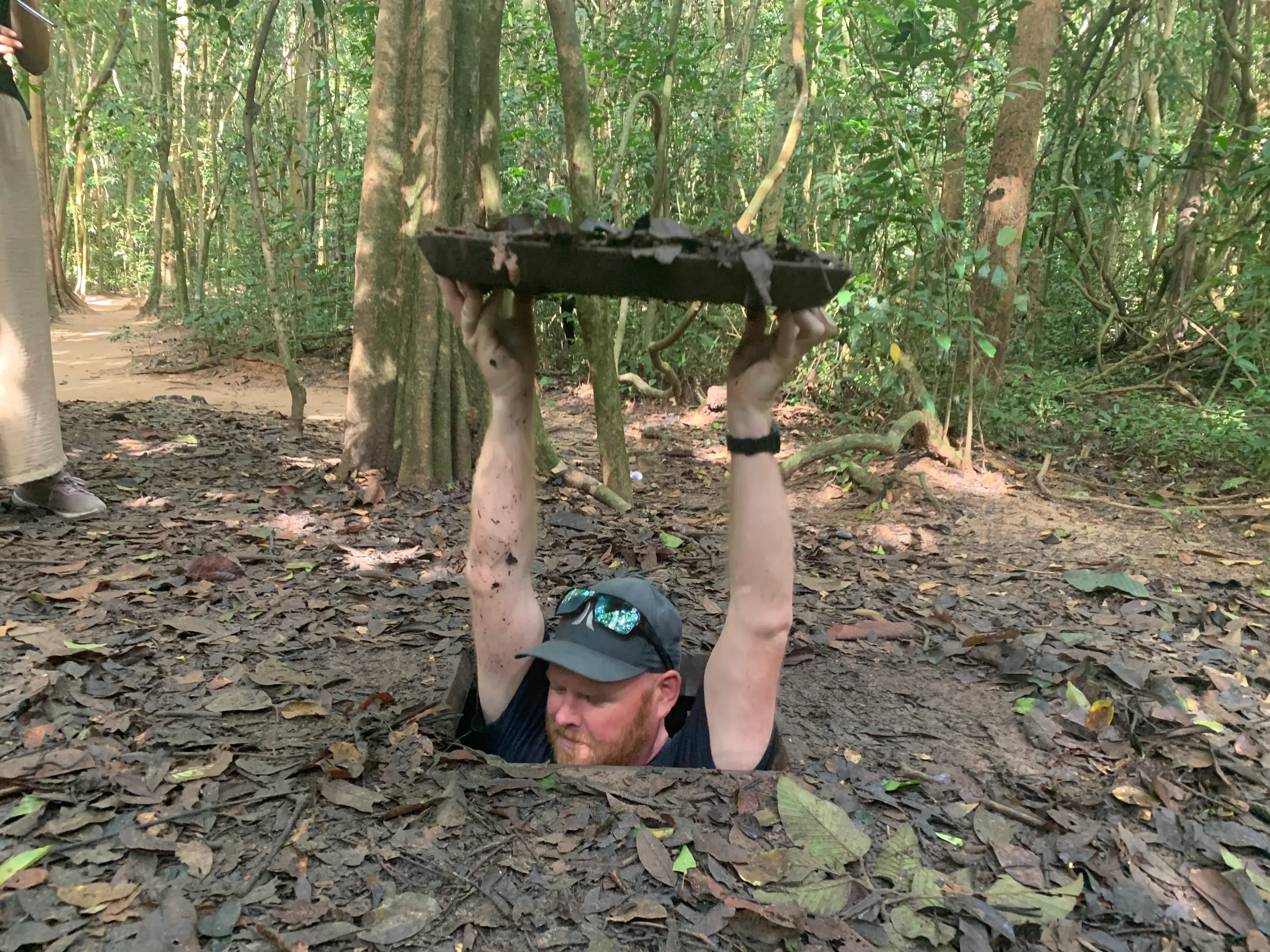
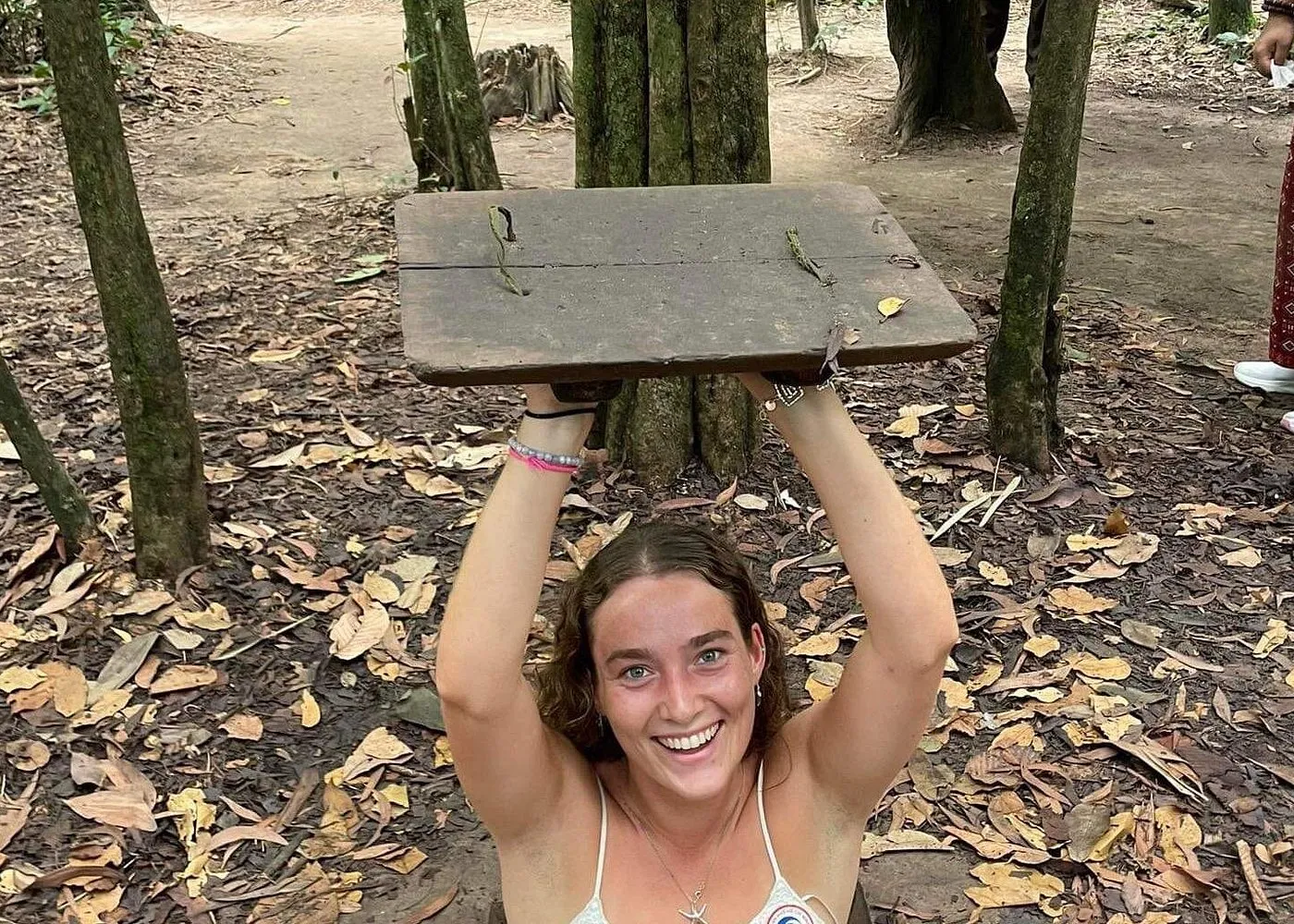
The moment everyone comes for: crouching into the widened, lit, tourist-safe stretch and shuffling through by lamplight. It is short, optional, and unforgettable — even this expanded version makes you wonder how anyone lived in the originals, which were narrower still. Claustrophobic travelers skip it happily; everyone else queues twice.
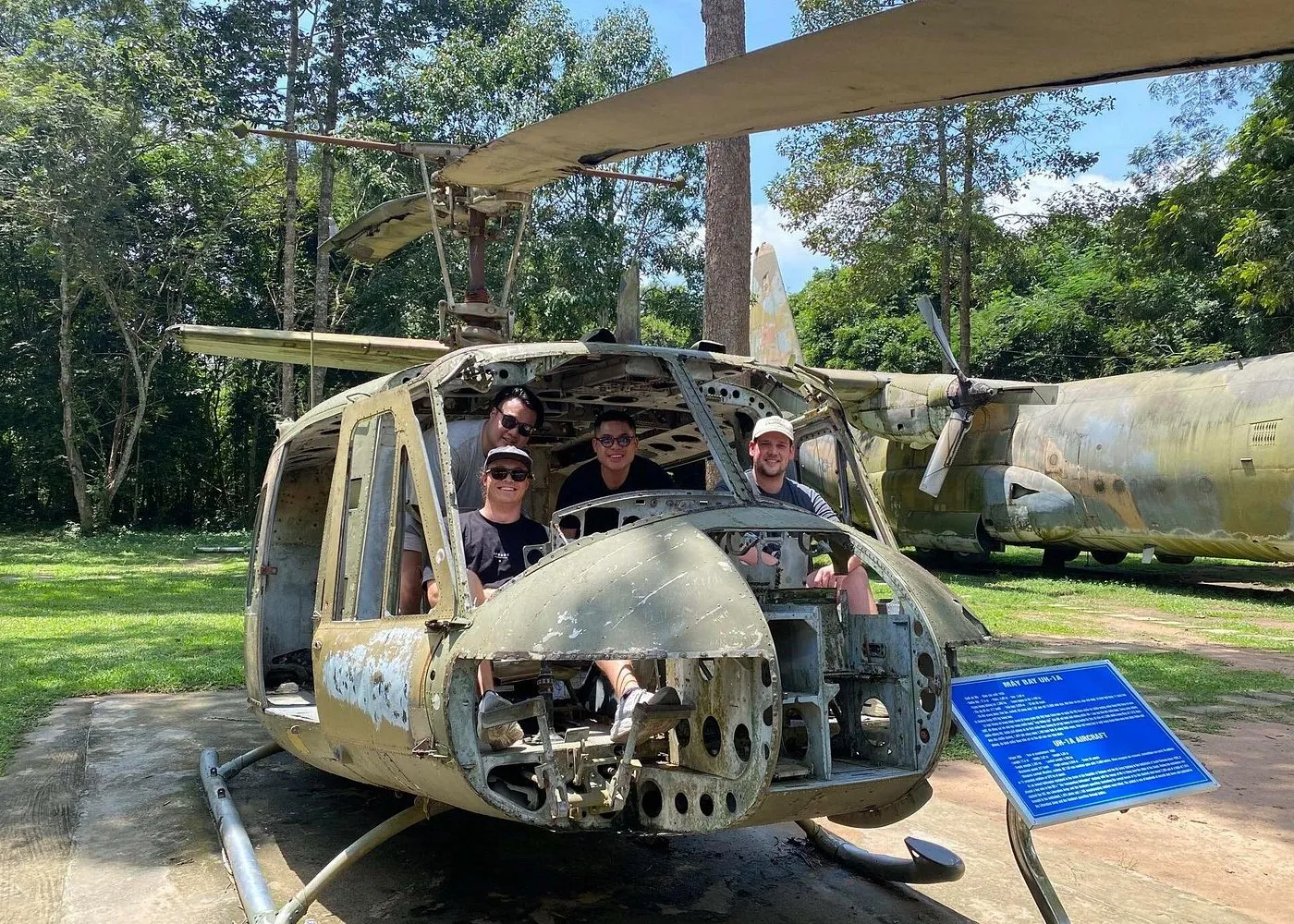
Above ground, the exhibits do the explaining: bamboo spike traps in glass cases, the remarkable smokeless stove that cooked without revealing a kitchen, uniforms sandals worn backwards to fool trackers, and the tiny hatch entrances a tank could pass over without noticing. It is engineering as survival — sobering, clever, quietly devastating.

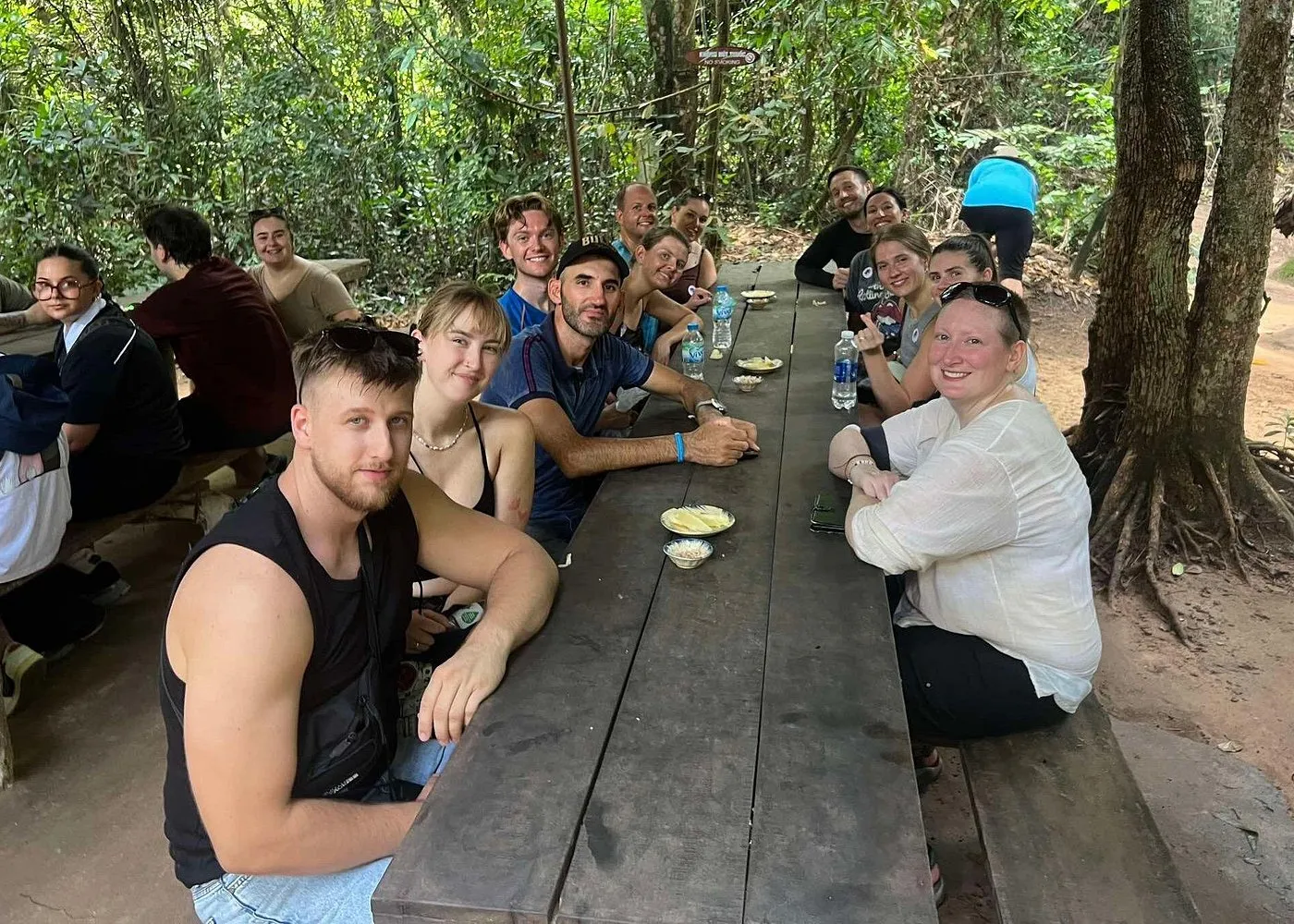
The visit closes above ground: B-52 bomb craters still dimpling the earth, a rifle range where the curious can fire (optional, paid, loud), and the wartime staple offered to every guest — boiled tapioca with sesame salt, and tea. It sounds like a footnote; somehow it is the taste everyone remembers.




04 · Tours & tickets
Most visitors come on a guided half-day tour from Ho Chi Minh City — transport and context included, with some trips returning by speedboat on the Saigon River. Check availability, then browse live picks below.
Half-day and full-day tours from Saigon, speedboat returns, free cancellation on many bookings.
05 · Traveler voices
Our guide made the whole place come alive. Crawling even twenty meters of the tunnel gave me a respect I did not expect to feel that strongly.
Ben Duoc was the right call — quiet, green, and the memorial there genuinely moved me. The tapioca and tea at the end was a lovely touch.
Very worthwhile, but it gets busy by mid-morning — take an early tour. The tunnel crawl is totally optional, which my claustrophobic wife appreciated.
Coming back by speedboat was the best decision — tunnels in the morning, river in the afternoon, and we skipped the traffic entirely.
Quotes are condensed and paraphrased from recent Tripadvisor traveler reviews; names shortened for privacy.
06 · Field notes
Guides, itineraries and notes on the Cu Chi Tunnels and Saigon — newest first.

The Honest Guide for Travelers Short on Time in Ho Chi Minh City ⏰ You’ve just landed in Ho Chi Minh City.…
Read more
The Ultimate Guide to Skipping the Traffic and Experiencing Cu Chi in Style 🚤 Imagine this: Instead of being stuck in a…
Read more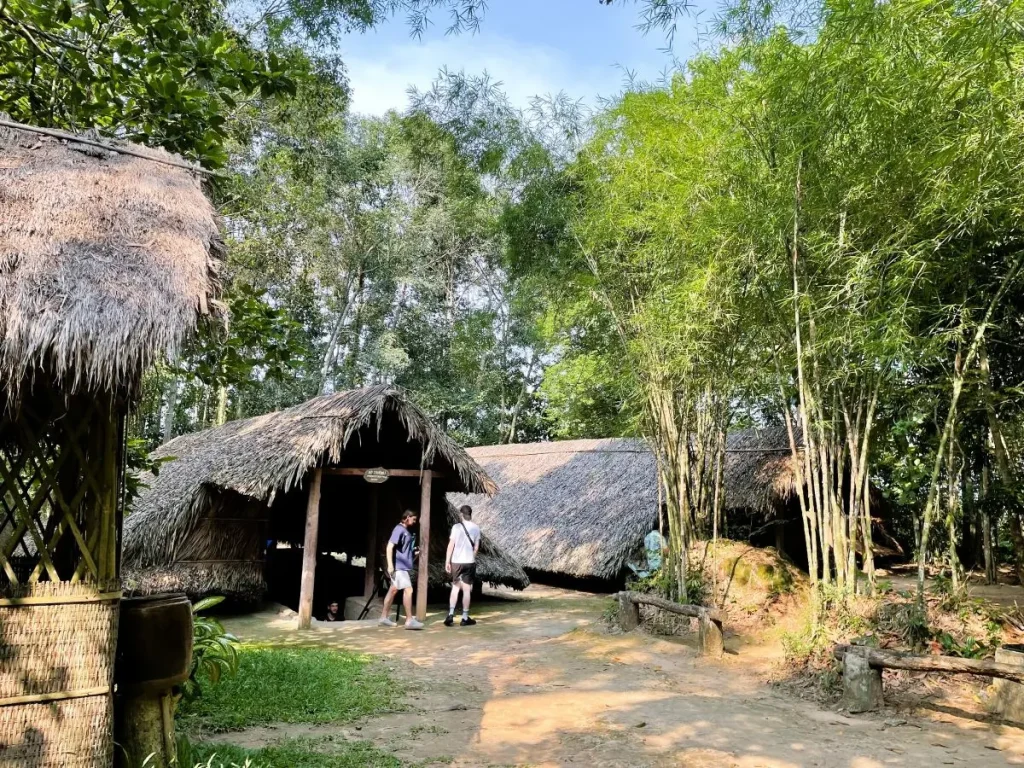
The Complete Comparison Guide for First-Time Visitors to Ho Chi Minh City’s Most Iconic War Landmark 🏛️ Why Are There Two Cu…
Read more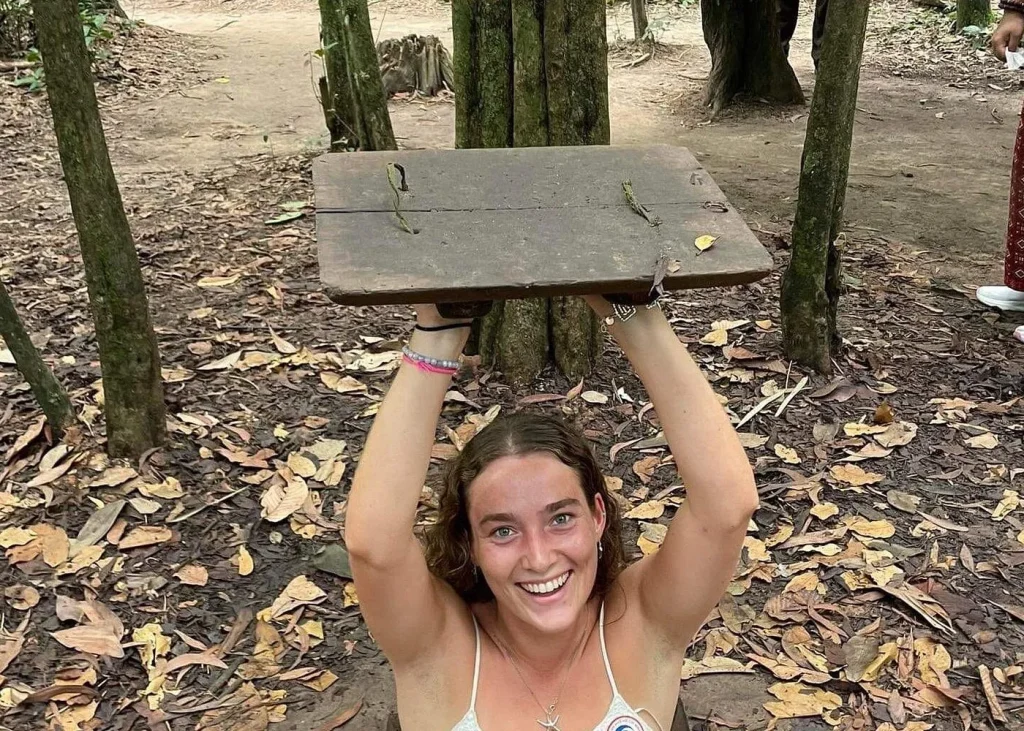
Planning to explore the legendary Cu Chi Tunnels near Ho Chi Minh City? Before you crawl through these remarkable underground networks, you…
Read more
Visiting the legendary Cu Chi Tunnels is a highlight for many travelers to Vietnam. But before you can crawl through these remarkable…
Read more
Planning a visit to the legendary Cu Chi Tunnels near Ho Chi Minh City? Knowing the opening hours and entrance fees is…
Read more07 · Plan your visit
Getting there
The easy default: hotel pickup, a guide, entry timed to dodge the crowds — and some tours return by speedboat up the Saigon River, skipping the traffic entirely. Compare tours on Viator
Local buses run from central Saigon toward Cu Chi, with a short connecting ride to the sites — the budget option, and very doable, though it eats more of your day. Check current route numbers; they change.
Roughly 70 km northwest — about 1.5 hours each way depending on traffic. Private car and driver for the half-day costs more than a group tour, so tours usually win on value. Open in Google Maps
A perfect half-day
Beat the coach waves — the difference between the 9am and 11am site is night and day.
Film, sand-table model, and the trap gallery while the air is still cool.
Hats off, bags handed over, camera ready. Twenty meters will feel like plenty.
At Ben Dinh — paid, loud, and entirely skippable. Ear protection provided.
The wartime staple, served to every guest. Sit down, rest, take it in.
By road — or by speedboat if your tour offers it. Lunch in town by two.
Both sites typically open daily from early morning until late afternoon. Entry fees are modest and paid at the gate; tours usually bundle the ticket. Verify current prices before you go.
December–April for the dry season, and weekday mornings year-round. The tunnels stay cool but the jungle above does not — go early.
Half-day tours from Saigon with hotel pickup, guides who lived the story, and free cancellation on many bookings — on Viator.
08 · Good to know
Six questions every first-timer asks — answered honestly, so nothing surprises you at the hatch.
Both offer the crawl, the exhibits and the story. Ben Dinh is closer to Saigon, more built-up and usually busier; Ben Duoc is farther out, greener, calmer, and includes a moving memorial temple. If your time is tight, Ben Dinh on a group tour is the practical pick. If you have flexibility — or simply dislike crowds — Ben Duoc rewards you.
You can absolutely skip it — plenty of visitors do, and nobody is pushed. The tourist section has been widened and lit, and runs a short, manageable distance with exits along the way. If that still sounds like too much, the surface exhibits tell the full story; the crawl is the garnish, not the meal.
Around 70 km — about 1.5 hours by road. A guided half-day tour is the most popular option (transport, guide, tickets sorted); public buses run out toward Cu Chi for the budget route; taxis or private cars work too. Some premium tours return by speedboat along the Saigon River. See tour options on Viator
Half a day door to door: roughly 2.5–3 hours on site if you do the film, the exhibits, the crawl and the tastings properly, plus the drive each way. A full-day tour that pairs Cu Chi with the Cao Dai Temple or the Mekong Delta is the classic combo if you want more.
Light, breathable clothes you do not mind getting dusty, and closed shoes with a grip — the ground is dirt and the crawl rewards knees and elbows. Add insect repellent, sunscreen, water, and a hat for the open stretches. Bags can usually be left with the vehicle during the crawl.
At Ben Dinh, visitors can pay extra to fire rounds from vintage rifles at the on-site range — an odd but popular add-on. It is entirely optional, clearly priced, and easy to ignore if it is not your thing; the rest of the site carries on regardless. Ear protection is provided, and safety staff supervise closely.
One last thing
Guided tours · Tickets · Traveler reviews