


Planning to explore the legendary Cu Chi Tunnels near Ho Chi Minh City? You’ve probably discovered there are two main sites open to tourists: Ben Duoc and Ben Dinh. But which one should you choose? Should you prioritize authenticity and historical immersion, or comfort and convenience?
This comprehensive guide compares Ben Duoc vs. Ben Dinh Cu Chi Tunnels in detail, helping you make the perfect choice for your travel style, physical abilities, and historical interests. Whether you’re a history buff seeking the raw, original experience or a casual traveler wanting an accessible, informative visit, we’ll break down everything you need to know—from tunnel conditions and crowd levels to tour options and practical logistics.
Understanding the Cu Chi Tunnels: A Brief Historical Overview
Before diving into the comparison, it’s essential to understand what makes the Cu Chi Tunnels significant. During the Vietnam War (known locally as the American War or Resistance War Against America), this district northwest of Saigon became a strategic stronghold for Viet Cong forces.
What began as simple hiding spots in the 1940s evolved into an extraordinary underground network spanning over 250 kilometers. These tunnels served as living quarters, hospitals, command centers, supply routes, and launching points for surprise attacks—all while remaining concealed from one of the world’s most powerful militaries.
Today, two sections of this vast network have been developed for tourism: Ben Dinh and Ben Duoc. Both offer valuable insights into this remarkable chapter of history, but they cater to different visitor preferences and expectations.
Ben Dinh Tunnels: The Convenient, Tourist-Friendly Experience
Location and Accessibility
Ben Dinh Tunnels are located approximately 70 kilometers from Ho Chi Minh City, about a 1.5-hour drive depending on traffic. This site is the more frequently visited of the two, largely due to its proximity to main tourist routes and well-developed infrastructure.
Getting there:
- Most tour operators include Ben Dinh in their standard Cu Chi Tunnel packages
- Transportation is typically via air-conditioned minibuses or coaches
- The site features a large, paved parking area for tour vehicles
- Clear signage in English and Vietnamese guides visitors from the entrance
Tunnel Conditions: Comfort Meets History
Ben Dinh has been extensively restored and modified to accommodate international tourists while preserving historical authenticity:
Widened passages: Original tunnel sections have been carefully expanded to allow average-sized adults to crawl through comfortably. While still narrow and dimly lit, the experience is accessible to most visitors without extreme physical challenge.
Improved lighting and ventilation: Electric lighting has been installed throughout visitor sections, and ventilation has been enhanced to ensure a comfortable experience even in Vietnam’s tropical heat.
Safety reinforcements: Structural supports have been added to prevent collapses, and emergency exits are clearly marked. Guides monitor groups closely throughout the underground exploration.
Multiple entry points: Several tunnel entrances allow for smoother visitor flow, reducing wait times and congestion.
Above-Ground Facilities and Exhibits
Ben Dinh excels in visitor amenities and educational resources:
Comprehensive museum: A well-organized exhibition hall features photographs, artifacts, weapons, and personal stories from the war period. English-language placards and audio guides provide context.
Demonstration areas: Regular demonstrations showcase:
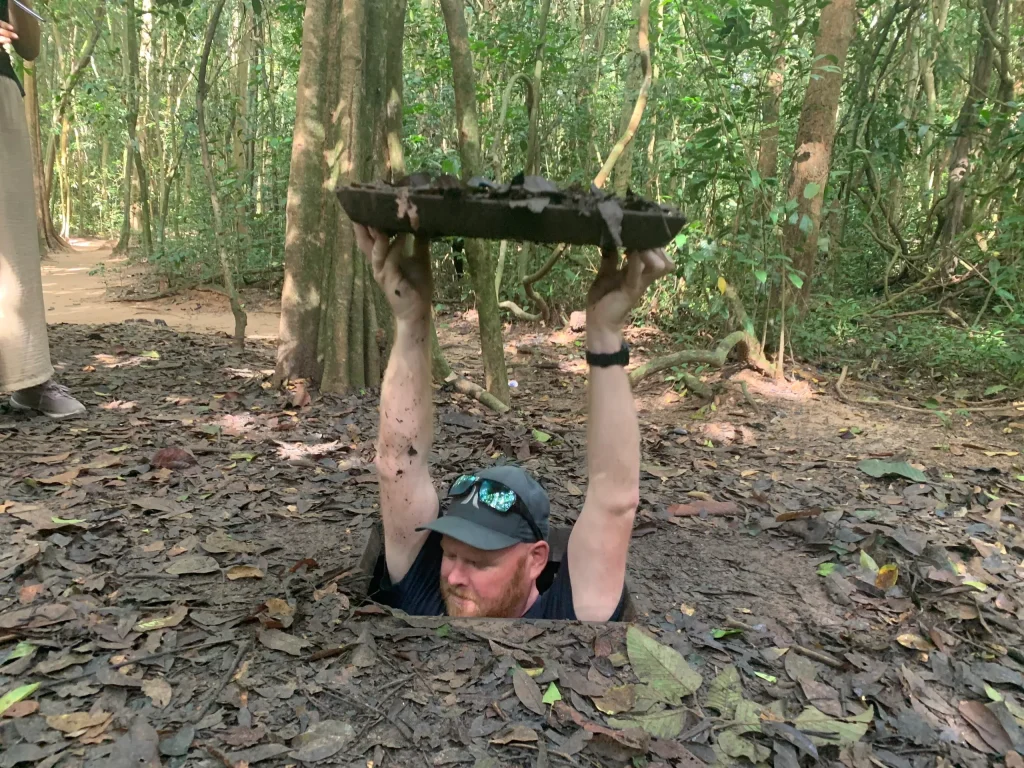
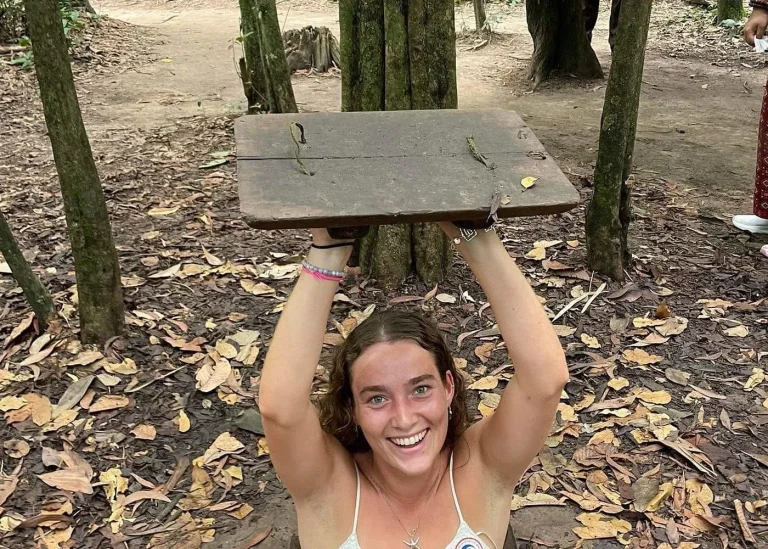
- How trap doors and concealment systems worked
- The operation of smokeless Hoàng Cam stoves
- Rice pounding and food preparation techniques used during the war
- Screening of historical documentaries in a dedicated theater
Shooting range: An optional activity allows visitors to fire replica Vietnam War-era weapons (AK-47, M16, etc.) for an additional fee. This controversial feature attracts some tourists but is entirely optional.
Dining and shopping: Clean restroom facilities, a café serving light refreshments, and a souvenir shop offering handicrafts, books, and memorabilia enhance the visitor experience.
Shaded rest areas: Benches, covered pavilions, and garden spaces provide places to rest before or after tunnel exploration.
Crowd Levels and Tour Experience
Higher visitor volume: Ben Dinh is the more popular choice, especially for group tours. Expect:
- Larger tour groups (20-40 people common)
- Busier tunnel sections during peak hours (9 AM – 2 PM)
- More structured, timed itineraries
- Potential waiting for tunnel access during busy periods
Professional guiding: Guides at Ben Dinh are typically well-trained in English and experienced with international tourists. Tours follow a consistent script covering key historical points and engineering innovations.
Predictable pacing: The tour flow is well-organized, making it ideal for travelers with tight schedules or those joining multi-attraction day trips.
Ideal For: Who Should Choose Ben Dinh?
✅ First-time visitors to Vietnam or war history sites
✅ Families with children (ages 8+) who need accessible facilities
✅ Travelers with mobility concerns or claustrophobia (above-ground exhibits are extensive)
✅ Those short on time who want a comprehensive but efficient experience
✅ Visitors prioritizing comfort, clear explanations, and photo opportunities
✅ Groups seeking coordinated logistics and reliable scheduling
Ben Duoc Tunnels: The Authentic, Immersive Historical Experience
Location and Accessibility
Ben Duoc Tunnels are situated slightly farther from Ho Chi Minh City—approximately 75-80 kilometers, or about a 2-hour drive. This additional distance contributes to a quieter, less commercialized atmosphere.
Getting there:
- Fewer tour operators include Ben Duoc in standard packages; you may need to book a specialized or private tour
- Transportation is similar (air-conditioned vehicles), but routes may be less direct
- Parking is available but less expansive than at Ben Dinh
- Signage is adequate but less prominent; having a guide helps navigation
Tunnel Conditions: Closer to the Original
Ben Duoc has undergone minimal restoration, preserving a more authentic representation of the wartime tunnels:
Narrower passages: Tunnel sections remain closer to their original dimensions—approximately 0.8 meters wide and 1.8 meters high. Crawling requires more effort and may be challenging for larger adults or those with mobility limitations.
Dimmer, atmospheric lighting: Lighting is more subdued to recreate the original underground environment. Bring a small flashlight if you’re sensitive to darkness.
Authentic soil and structure: You’ll experience the laterite clay soil, natural humidity, and earthen walls as tunnel residents did. The sensory experience is more immersive but also more physically demanding.
Fewer modifications: Safety measures exist, but the emphasis is on historical accuracy rather than visitor comfort. This creates a more powerful, if challenging, connection to the past.
Above-Ground Facilities and Exhibits
Ben Duoc prioritizes historical preservation over tourist amenities:
Ben Duoc Memorial Temple: A significant feature absent at Ben Dinh, this impressive temple honors Vietnamese martyrs who died during the war. The architecture blends traditional Vietnamese design with solemn memorial spaces, offering a profound moment for reflection.
More intimate museum: The exhibition area is smaller but often features more detailed historical narratives and personal testimonies. The focus is on education rather than entertainment.
Fewer demonstrations: While basic demonstrations of tunnel techniques may be available, Ben Duoc offers fewer staged performances than Ben Dinh. The experience is more self-directed and contemplative.
Basic facilities: Restrooms and seating areas are available but simpler. Food options are limited; consider eating before arrival or bringing snacks.
Natural surroundings: The site is nestled in a more rural setting, with rubber plantations and farmland visible. This enhances the sense of stepping back in time.
Crowd Levels and Tour Experience
Lower visitor volume: Ben Duoc receives fewer tourists, resulting in:
- Smaller, more intimate tour groups (often under 15 people)
- Less congestion in tunnel sections
- More time for questions and personal reflection
- A quieter, more contemplative atmosphere
Specialized guiding: Guides at Ben Duoc often have deeper historical knowledge and may share more nuanced perspectives. Tours can be more flexible and responsive to group interests.
Slower pacing: The experience encourages lingering, discussion, and absorption of the historical significance rather than rushing through a checklist.
Ideal For: Who Should Choose Ben Duoc?
✅ History enthusiasts seeking the most authentic tunnel experience
✅ Solo travelers or small groups preferring intimate, uncrowded visits
✅ Photographers wanting atmospheric, less-commercialized settings
✅ Visitors with good physical fitness comfortable with confined spaces
✅ Those interested in memorial culture and the Ben Duoc Temple
✅ Travelers who value depth over convenience and don’t mind a longer journey
Side-by-Side Comparison: Ben Duoc vs. Ben Dinh at a Glance
| Feature | Ben Dinh Tunnels | Ben Duoc Tunnels |
|---|---|---|
| Distance from HCMC | ~70 km (1.5 hours) | ~75-80 km (2 hours) |
| Tunnel authenticity | Modified for comfort; widened passages | Closer to original; narrower, more challenging |
| Lighting & ventilation | Enhanced for visitor comfort | Minimal; more atmospheric, dimmer |
| Crowd levels | Higher; popular with group tours | Lower; quieter, more intimate |
| Above-ground facilities | Extensive: museum, demos, café, shop, shooting range | Basic: smaller museum, memorial temple, limited amenities |
| Memorial features | Standard exhibits | Ben Duoc Memorial Temple (significant cultural site) |
| Tour availability | Widely offered by most operators | Fewer operators; may require specialized booking |
| Physical demands | Moderate; accessible to most adults | Higher; requires crawling in tight spaces |
| Best for | Convenience, comfort, first-time visitors | Authenticity, immersion, history-focused travelers |
| Photography | Good lighting; many photo ops | Atmospheric; fewer staged scenes |
| Time needed | 3-4 hours total (including transport) | 4-5 hours total (including transport) |
Making Your Decision: Questions to Ask Yourself
Still unsure which site is right for you? Consider these key questions:
1. What’s your primary goal for visiting?
- Learning history efficiently → Ben Dinh
- Experiencing history viscerally → Ben Duoc
2. What’s your physical comfort level?
- Prefer minimal physical challenge → Ben Dinh
- Comfortable crawling in tight, dark spaces → Ben Duoc
3. How do you handle crowds?
- Don’t mind groups; prefer structured tours → Ben Dinh
- Prefer solitude; value quiet reflection → Ben Duoc
4. What’s your schedule like?
- Tight itinerary; combining with other attractions → Ben Dinh
- Flexible day; willing to travel farther for depth → Ben Duoc
5. Are you traveling with others?
- Family with children or elderly members → Ben Dinh
- Solo traveler, couple, or small group of adults → Ben Duoc
6. What matters more: comfort or authenticity?
- Comfort, clear explanations, amenities → Ben Dinh
- Authenticity, atmosphere, historical immersion → Ben Duoc
Practical Tips for Visiting Either Site
Best Time to Visit
- Dry season (November-April): Cooler, drier conditions make tunnel exploration more comfortable at either site.
- Early morning departures: Leave Ho Chi Minh City by 7-8 AM to avoid traffic and arrive before peak crowds.
- Avoid Vietnamese holidays: Tet (Lunar New Year) and other major holidays bring massive domestic tourism.
What to Wear and Bring
Essentials for both sites:
- Lightweight, breathable clothing (long pants recommended for insect protection)
- Closed-toe shoes with good grip (you’ll be walking on uneven terrain and crawling)
- Insect repellent and sunscreen
- Water bottle and small snacks
- Cash for entrance fees, souvenirs, and optional activities
- Camera (photography is permitted in most areas)
Additional for Ben Duoc:
- Small flashlight or headlamp (tunnels are dimmer)
- Extra water (fewer refreshment options on-site)
- Patience and physical readiness for a more challenging experience
Additional for Ben Dinh:
- Budget for optional shooting range if interested
- Time for souvenir shopping and café breaks
Booking Your Tour
For Ben Dinh:
- Easily booked through most Ho Chi Minh City hotels, hostels, and tour agencies
- Group tours typically cost $10-25 USD; private tours $50-100+ USD
- Confirm whether entrance fees, lunch, and shooting range are included
For Ben Duoc:
- May require advance research; not all operators offer this site
- Private or small-group tours are more common
- Expect slightly higher prices due to specialized routing and smaller groups
- Confirm guide expertise in historical details if that’s important to you
Independent Travel Considerations
While guided tours are recommended for first-time visitors, independent travel is possible:
- Public buses reach Cu Chi district but require transfers and Vietnamese language skills
- Motorbike rental offers flexibility but demands navigation confidence
- Ride-hailing apps (Grab) can arrange round-trip transport but may wait fees apply
- Independent visitors should research opening hours, entrance fees, and site maps in advance
Frequently Asked Questions
Can I visit both Ben Duoc and Ben Dinh in one day?
Technically possible but not recommended. The sites are 15-20 km apart, and each deserves 2-3 hours for meaningful exploration. Attempting both would feel rushed and exhausting.
Are the tunnels safe to explore?
Yes, both sites have been assessed for visitor safety. Ben Dinh has more reinforcements; Ben Duoc maintains original conditions with basic safety measures. Follow guide instructions and avoid restricted areas.
What if I’m claustrophobic?
Ben Dinh offers wider tunnels and better lighting, making it more suitable. At either site, you can enjoy extensive above-ground exhibits without entering tunnels if needed.
Is the shooting range at Ben Dinh appropriate?
This is a personal choice. The activity is optional, historically contextualized, and conducted under supervision. If uncomfortable, simply decline and focus on other exhibits.
Can children visit the tunnels?
Yes, but consider age and maturity. Ben Dinh is more family-friendly due to wider passages and facilities. Children under 8 may find the experience frightening or physically challenging.
Do I need to speak Vietnamese?
No. Both sites cater to international tourists with English-speaking guides, translated signage, and audio guides available in multiple languages.
What’s the entrance fee?
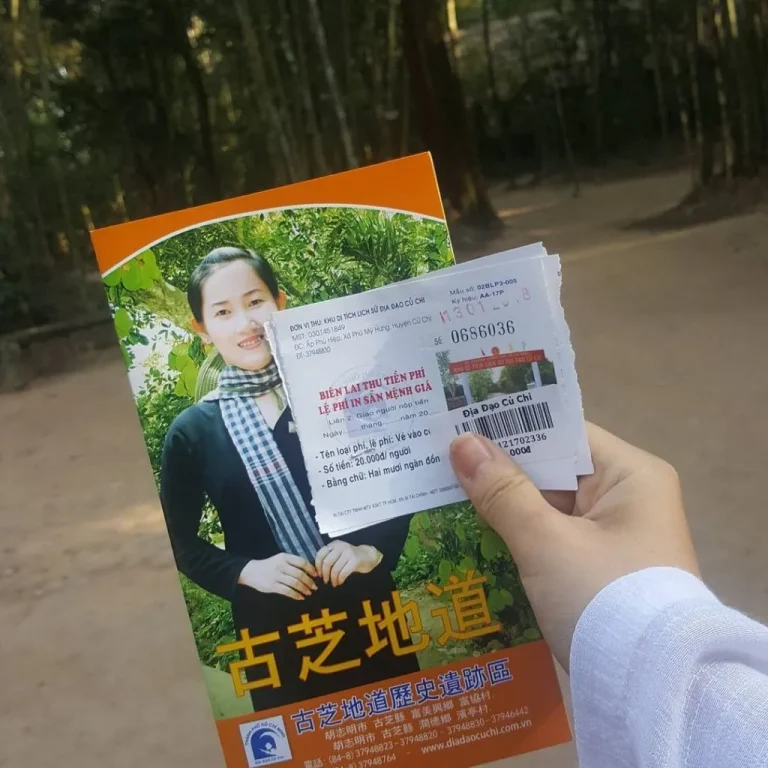
Approximately 110,000-150,000 VND ($5-7 USD) for international visitors at either site. Fees contribute to preservation and maintenance.
Can I visit without a tour?
Yes, but guided tours provide valuable historical context and logistical convenience. Independent visitors should research thoroughly and allow extra time for navigation.
Final Recommendation: Choose Based on Your Travel Style
There’s no universally “better” choice between Ben Duoc and Ben Dinh—only the option that best aligns with your priorities, physical capabilities, and travel goals.
Choose Ben Dinh if: You value convenience, comfort, and efficiency. You’re visiting Vietnam for the first time, traveling with family, or combining the tunnels with other attractions. You want clear explanations, good facilities, and a manageable physical experience without sacrificing historical understanding.
Choose Ben Duoc if: You seek authenticity, immersion, and a deeper connection to history. You’re a solo traveler or small group comfortable with physical challenges. You prefer quieter settings, meaningful memorials, and don’t mind traveling farther for a more raw, contemplative experience.
Whichever you choose, visiting the Cu Chi Tunnels is a powerful reminder of human resilience, ingenuity, and the enduring cost of conflict. These underground networks weren’t just military installations—they were homes, hospitals, and symbols of determination built by ordinary people under extraordinary circumstances.
As you crawl through those earthen passages, breathe the humid air, and imagine the lives lived beneath the surface, you’re not just touring a historical site. You’re bearing witness to a story of survival that continues to shape Vietnam today.
Ready to explore? Book your Cu Chi Tunnels tour with confidence, knowing you’ve chosen the site that matches your travel style. Whether you opt for the convenient comfort of Ben Dinh or the authentic immersion of Ben Duoc, you’ll leave with a deeper understanding of Vietnam’s history—and a profound appreciation for the engineering marvels hidden beneath its soil.

Comments